
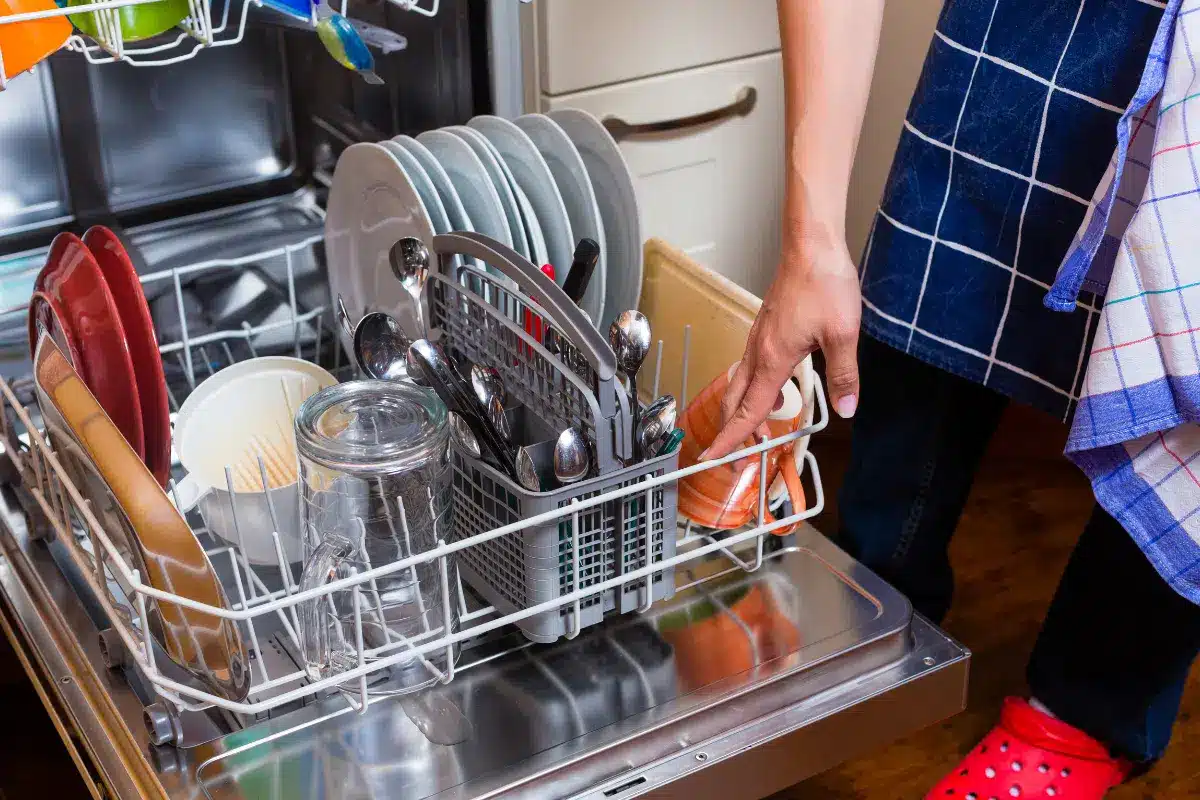
A dishwasher not dispensing soap can leave you with cloudy glasses, food residue, and dishes that still feel dirty after a complete wash cycle. The detergent dispenser is designed to release detergent at the correct point in the cycle, so when that does not happen, the dishwasher may be unable to clean effectively.
The cause is not always the dispenser itself. Loading problems, detergent buildup, water temperature, dispenser damage, and electrical components can all affect detergent release. Knowing how these issues interfere with the wash cycle can help narrow down what is happening.
Common Causes of Dishwasher Not Dispensing Soap
When a dishwasher not dispensing soap becomes a recurring problem, pay attention to what happens to the detergent after each cycle. A dispenser that remains completely closed points toward a different issue than one that opens but leaves a partially dissolved detergent pod behind.
The following causes explain why detergent may remain trapped in the dispenser or fail to dissolve properly.
1. Dishes Are Blocking the Detergent Dispenser
Dish placement can prevent the detergent door from opening even when the dispenser itself works correctly. Large plates, cutting boards, pans, or utensils positioned directly in front of the dispenser can physically block its movement.
Look at how the dishwasher is loaded when the problem occurs.
- Keep tall and oversized items away from the dispenser door.
- Make sure utensil handles are not positioned where they can interfere with the door.
- Confirm that the dispenser can open freely before starting the cycle.
If changing the loading arrangement does not solve the problem, another issue may be preventing detergent from being released.
2. Detergent Has Clumped Inside the Dispenser
Powdered detergent can absorb moisture and form hard clumps. Residue from previous cycles can also accumulate around the detergent compartment and interfere with the dispenser door.
Inspect the visible dispenser area after the dishwasher has finished its cycle. Dried detergent around the lid or compartment can be carefully wiped away without removing any dishwasher components.
Fresh detergent matters too. Powdered products should be stored in a tightly closed container in a dry location because exposure to moisture can cause clumping and reduce how well the detergent dissolves.
If the dispenser is clean and fresh detergent does not correct the issue, the problem may involve the wash conditions or dispenser mechanism.
3. The Dishwasher Is Not Getting Hot Enough
Detergent needs adequately heated water to dissolve and clean effectively. A dispenser may open normally, yet leave detergent or part of a pod behind when the water does not become hot enough during the wash cycle.
A useful clue is the condition of the detergent after the cycle. A closed dispenser suggests a release problem, while an open compartment containing softened or partially dissolved detergent can point toward inadequate water temperature or water circulation.
If dishes also remain cool, greasy, or poorly cleaned, the dishwasher may have a heating-related problem. Heating components and their electrical circuits require professional diagnosis.
Temperature problems can also affect drying performance. If dishes consistently come out wet as well as poorly washed, see our guide to dishwasher not drying dishes for additional causes to consider.
4. The Dispenser Door or Latch Is Damaged
The detergent dispenser has to stay closed when the dishwasher starts and release at the proper point in the wash cycle. Damage to the lid, latch, lever, or other dispenser components can interrupt that sequence.
Signs of dispenser damage can include:
- A detergent door that will not remain closed
- A door that remains shut after the cycle
- Visible cracks or warping
- A latch that does not appear to engage correctly
- Intermittent detergent release
Visible damage can help identify the source of the problem, but the dispenser should not be disassembled for further investigation. A technician can determine whether an individual component or the complete dispenser assembly requires replacement.
If the dispenser appears physically intact, the failure may instead involve the mechanism responsible for activating it.
5. The Detergent Dispenser Assembly Has Failed
The complete dispenser assembly controls when detergent is released into the dishwasher. Depending on the model, an internal actuator or related mechanism allows the detergent door to open at the appropriate stage of the cycle.
A dishwasher not dispensing soap despite proper loading, fresh detergent, and a clean dispenser may have an internal dispenser failure. One useful symptom is consistency. If the detergent door remains closed after multiple complete cycles without anything blocking it, the dispenser assembly becomes a stronger suspect.
Because diagnosing the assembly can involve powered components and internal parts, this problem should be evaluated by a dishwasher repair professional.
6. Water Circulation Is Poor
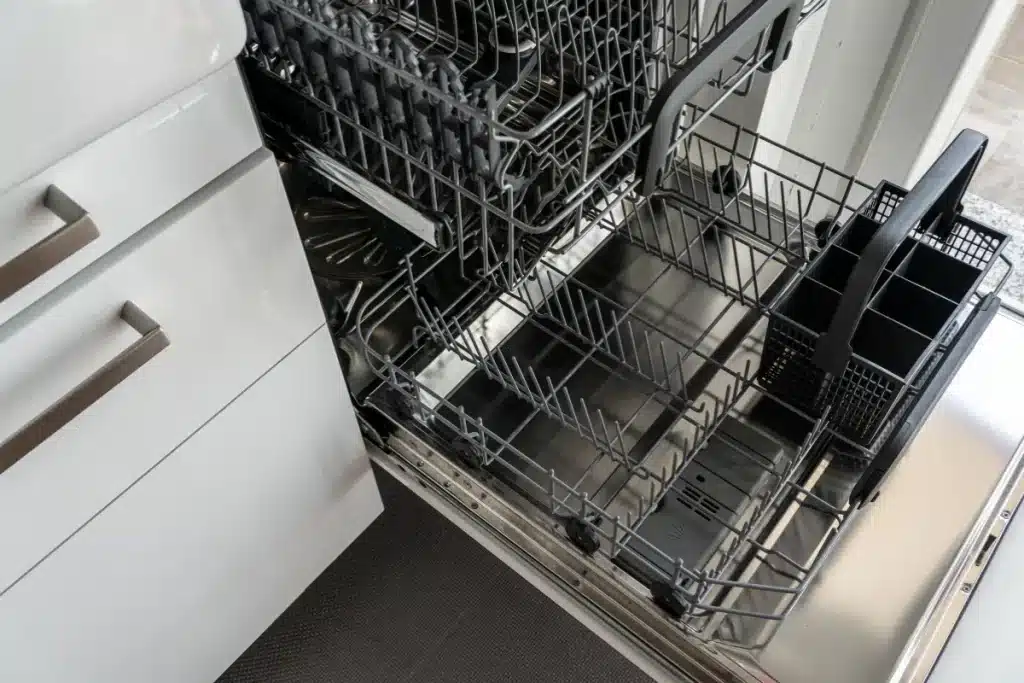
Opening the detergent compartment is only part of the cleaning process. Once detergent is released, circulating water needs to dissolve it and distribute it throughout the tub.
Poor circulation may leave detergent concentrated around the dispenser or at the bottom of the dishwasher. You may also notice food remaining on dishes or inconsistent cleaning between the upper and lower racks.
Check the visible spray-arm openings for obvious food residue or mineral buildup without removing or disassembling components. Also make sure dishes are not positioned in a way that prevents the spray arms from rotating freely.
Persistent circulation problems can involve the wash system or pump assembly and should be professionally diagnosed rather than disassembled at home.
7. The Dishwasher Control Board Is Not Activating the Dispenser
Modern dishwashers rely on an electronic control board to coordinate the different stages of a wash cycle. At the appropriate time, the controls signal components such as the detergent dispenser to operate.
A control problem can prevent that signal from reaching the dispenser. Other symptoms may occur at the same time, including:
- Cycles that stop unexpectedly
- Controls that respond inconsistently
- Components that fail to activate at the expected time
- Error or fault codes on models with digital displays
Control board failure is generally less common than a loading obstruction or dispenser problem, so it should not be assumed based on a closed soap door alone.
Diagnosing electronic controls requires appropriate testing equipment and access to electrical components. A professional technician should handle this type of dishwasher diagnosis.
Helpful Troubleshooting Tips
Several observations can help distinguish a detergent problem from a dispenser or wash-system failure. The key is to look at what the dishwasher leaves behind after a complete cycle rather than focusing only on whether the dishes are dirty.
Try these troubleshooting tips:
- Check the dispenser after the cycle. If it is still closed, look for dishes or utensils that may have blocked it.
- Look at the remaining detergent. A dispenser that opens but contains wet detergent can indicate a dissolving, temperature, or circulation problem.
- Clean visible detergent residue. Wipe away buildup around the dispenser lid and compartment.
- Use fresh detergent. Replace powder that has become damp, hard, or clumpy.
- Review detergent recommendations. Use the detergent type and amount recommended in your dishwasher’s owner’s manual.
- Watch your loading pattern. If the problem occurs only with certain loads, a large item may be interfering with the dispenser or spray pattern.
- Note other symptoms. Poor cleaning, unusual cycle behavior, cool dishes, or displayed error codes can provide useful clues about a broader dishwasher problem.
These observations can resolve problems caused by detergent or loading while also giving a technician more useful information if the dispenser continues to malfunction.
When Professional Service Is Needed for a Dishwasher Not Dispensing Soap
A dishwasher not dispensing soap needs professional attention when the dispenser repeatedly remains closed despite proper loading and a clean compartment, or when there are signs of mechanical, circulation, heating, or electronic failure. Continuing to run cycles without proper detergent release can waste water and energy while still leaving dishes inadequately cleaned.
A trained technician can determine whether the failure comes from the dispenser assembly, wash system, heating components, controls, or another part of the dishwasher. Accurate diagnosis is particularly important when several symptoms occur together because replacing the dispenser will not correct a problem caused elsewhere in the appliance.
For dependable diagnosis and repair, contact Caesar’s Appliance Sales & Service for trusted Laguna Niguel dishwasher repair. Professional service can identify the underlying failure and restore proper detergent release and cleaning performance.